

Blood and Guts: What Tracey Emin Taught Me


I went to see Tracey Emin at Tate Modern not quite knowing what I was walking into. I came out with a different perspective.
Emin is a controversial figure. Some people find her work self-indulgent and technically unimpressive. Standing in those rooms, I understood why people say that and I understood why it doesn't matter.
The abortion changed Tracey and her art school process. Not because it gave her a subject, but because it cracked her open. After that, she stopped making art about her life and started making it from it. My Abortion, watercolours, a medicine bottle, a hospital wristband, sits not as confession but as witness. She was there. She is saying: this happened and I will not hide it.
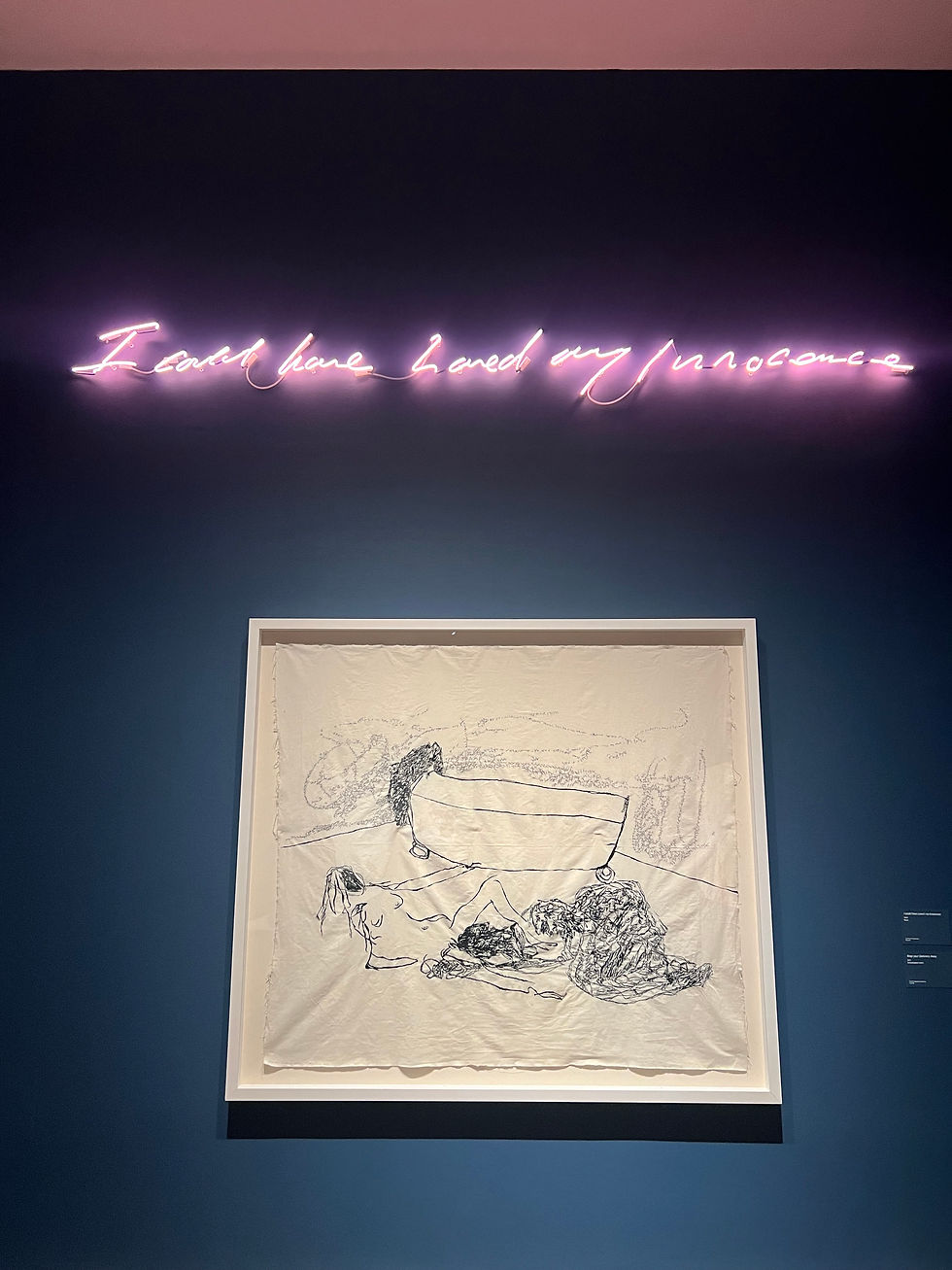
A neon sign reads I could have loved my innocence. Nearby, a small white cabinet holds five pairs of tiny children's shoes. Pink mary janes. Green lace-ups. Owl slippers. The shoes of children who existed, or didn't, or might have. In a perinatal context, I have rarely seen reproductive grief held so quietly.

The unmade bed. The neon texts. Her mother being spat at for her mixed heritage. Her father, absent and present in equal measure. Everything she has ever been ashamed of, laid out under gallery lighting, refusing to be tidied away.
What I witnessed was someone who had spent time feeling into the blood and guts of her own experience and had refused to look away.
As an art therapist, I spend time with people who are also living inside experiences that are hard to name. Pregnancy loss. The shock of becoming a mother or father. The body doing things that feel both miraculous and unbearable. So much of that experience carries shame, the feeling that it should be different or more grateful than it is.
Emin shows us that the mess is the meaning and in the therapy room, when someone picks up a paintbrush or reaches into the sand tray, something similar can happen. Not performance, but the beginning of no longer being alone with what is true.
Debi Magonet is an HCPC-registered Integrative Art Psychotherapist, based in Berkhamsted, Hertfordshire.


Comments